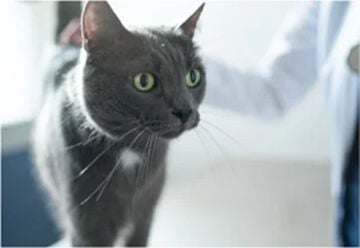
Grey cat with green eyes looking up from behind a curtain

Urinary Care

SUPPORT FOR URINARY HEALTH

Understanding Canine and Feline lower urinary tract disease

What are Urinary Issues?

Lower urinary tract disease (LUTD) encompasses a range of disorders from inflammation to crystal and stone formation. While the clinical signs can present in similar ways, the pathophysiology differs significantly between species.

Understanding Feline Lower Urinary Tract Disease (FLUTD)

Urinary issues present very differently for cats and dogs, and treatment plans will vary widely depending on the issue. While dogs commonly present with infections or stones, feline patients frequently present with complex, stress-linked conditions. While the clinical signs of FLUTD can often look similar across different causes, Feline Idiopathic Cystitis (FIC) remains the most prevalent cause of FLUTD. Some signs to look out for may include:

  • Periuria: Urinating in inappropriate locations

  • Dysuria: Painful or difficult urination

  • Stranguria: Straining during urination

  • Pollakiuria: Frequent, small-volume urination

  • Hematuria: Blood in the urine

diagram of feline luts
diagram of cat  stress and bladder relation

Demystifying Feline Idiopathic Cystitis (FIC): The Stress-Inflammation Feedback Loop

As veterinary professionals, effective  FIC treatment requires a multimodal approach. It’s not enough to treat the bladder alone; we must address the neuroendocrine link that drives this disease. In cats with FIC, the brain and the bladder are in constant, maladaptive communication.

The Bladder-Brain Connection

  • Environmental stress increases stimulus to the bladder, while bladder inflammation sends feedback to the brain, amplifying the stress response and creating a self-perpetuating cycle of pain.2

The Power of Multimodal Therapy

  • While analgesics help manage acute episodes, long-term success requires a multimodal approach. Pairing therapeutic nutrition with environmental modification, and sometimes medication, offers the most robust strategies for FIC recurrence and management. Implementing a successful multimodal treatment plan can help preserve the human-animal bond between the cat and pet parent.


Inappropriate urination is a leading reason cats are relinquished to shelters.1


Understanding Canine Urolithiasis

While feline urinary cases are frequently driven by stress, canine patients typically present with complex metabolic-based challenges like urolithiasis. Successfully managing these cases begins with identifying specific stone type (most commonly struvite, calcium oxalate, urate, or cystine) to determine course of action

For dissolvable stones, such as struvite stones, nutritional dissolution combined with the appropriate antibiotic therapy, is considered the clinical gold standard.8 On the other hand, non-dissolvable stones, such as calcium oxalates, must be removed surgically or via other removal treatments. After stone dissolution or removal, the focus for these patients should shift towards proactive prevention and monitoring. Placing patients on long-term therapeutic urinary nutrition combined with regular screening can help reduce the risk of future stone formation.

A man petting on the head a big brown dog with the tongue out.

Learn More & Earn Free Online CE


Hill’s Partnerships

A horizontal banner for Minnesota Urolith Center alongside the Hill's Transforming Lives logo, featuring a microscope icon on the left.

Hill’s + Minnesota Urolith Center (MUC)

Hill's is proud to sponsor the Minnesota Urolith Center (MUC) - the global standard for urolith analysis and treatment advice. To set up an account for your clinic and learn how to send in samples, visit UrolithCenter.org.


Sign in or register to learn more about managing urinary health

Unlock expansive professional tools and benefits for long-term urinary health management.

Join or sign in with a registered HillsVet.com account to view more:

Legal & Privacy Policy | Terms & Conditions

Explore Hill’s Urinary Nutrition

For Feline Patients: Hill's Prescription Diet c/d Multicare Products

Reduces Recurrence

  • Clinically shown to reduce the recurrence rate of FIC signs by 89%.5

Stone Dissolution

  • Helps dissolve struvite stones in as little as 7 days* (*avg 27 days).7

Stress Management

  • Prescription Diet c/d Multicare Stress products are formulated with ingredients to help manage stress, including L-tryptophan & hydrolyzed casein.6

Overall Wellbeing

  • c/d Multicare Stress is clinically shown to improve emotional and quality of life scores in cats with FIC through the inclusion of stress reducing ingredients.3
Hill's Prescription Diet Urinary Care cat food bags and cans lineup
Hill's Prescription Diet Urinary Care dog food bags and cans lineup

For Canine Patients: Hill’s Prescription Diet Urinary Products

Hill's Prescription Diet c/d Multicare:

  • Effective Dissolution
    Formulated to dissolve struvite stones in dogs. Appropriate antibiotic therapy may be needed to clear a confirmed bacterial infection when struvite stones are present.
  • Formulated for Risk Reduction
    Clinical nutrition specially formulated to reduce the risk of calcium oxalate and struvite stones in dogs.

Hill’s Prescription Diet u/d:

  • Designed to Reduce Risk of Stones
    Controlled levels of high-quality, highly digestible protein with decreased amounts of purines helps reduce the risk of urate & cystine stone and crystal formation.

Questions? We have answers.

Our free consultancy service for veterinary professionals can help. Contact us and we'll help find the right Hill’s pet foods for your patients.

REFERENCES:

1 Liu S, et al. A six-year retrospective study of outcomes of surrendered cats (Felis catus) with periuria in a no-kill shelter. JEVB. 2021;42:75-80.

2 Westropp JL, Buffington CA. Lower urinary tract disorders in cats. In: Ettinger SJ, Feldman EC, eds. Textbook of Veterinary Internal Medicine. 7th ed. St. Louis, MO: Saunders Elsevier; 2010:2069-2086.

3 Meyer, H, and I. Bečvářová. “Effects of a Urinary Food Supplemented with Milk Protein Hydrolysate and L-Tryptophan on Feline Idiopathic Cystitis – Results of a Case Series in 10 Cats.” Accessed 10 Sept. 2025.


4 Krause, Laurel R, et al. “Survey of Veterinarians in the USA to Evaluate Trends in the Treatment Approach for Non-Obstructive Feline Idiopathic Cystitis.” Journal of Feline Medicine and Surgery, vol. 26, no. 8, Aug. 2024.

5 Kruger JM, Lulich JP, MacLeay J, Merrills J, Paetau-Robinson I, Brejda J, Osborne CA. Comparison of foods with differing nutritional profiles for long-term management of acute nonobstructive idiopathic cystitis in cats. J Am Vet Med Assoc. 2015 Sep 1;247(5):508-17. doi: 10.2460/javma.247.5.508. PMID: 26295556.

6 Meyer, H, and I. Bečvářová. “Effects of a Urinary Food Supplemented with Milk Protein Hydrolysate and L-Tryptophan on Feline Idiopathic Cystitis – Results of a Case Series in 10 Cats.” Accessed 10 Sept. 2025.

7 Lulich JP, et al. Efficacy of two commercially available, low-magnesium, urine-acidifying dry foods for the dissolution of struvite uroliths in cats. J Am Vet Med Assoc. 2013;243(8):1147-1153.

8 Lulich JP, et al. ACVIM Small Animal Consensus Recommendations on the Treatment and Prevention of Uroliths in Dogs and Cats. J Vet Intern Med. 2016;30(5):1564-1574.

9 Floerchinger AM, et al. Effect of feeding a weight loss food beyond a caloric restriction period on body composition and resistance to weight gain in cats. J Am Vet Med Assoc. 2015;247(4):365-374.

10 Data on file. Hill’s Pet Nutrition, Inc. 2015.

11 Floerchinger AM, et al. Effect of feeding a weight loss food beyond a caloric restriction period on body composition and resistance to weight gain in dogs. J Am Vet Med Assoc. 2015;247:375-384.